

How prompts are generated
To ensure diversity and realistic context, prompts are generated across three user-intention types:
This range covers the full spectrum of user behaviour, from informational and social to transactional.
How the Influence Score works
Each source receives an Influence Score based on how frequently it appears and how prominently it is positioned across AI-generated responses. The formula combines two dimensions:- Frequency (75%) — how often a domain appears in responses.
- Position (25%) — how high that domain ranks in the list.
Why position matters more at the top
People look more at the top of any list, so the formula uses a curve that gives extra credit to websites in the first few positions — similar to how Google search treats the top of a SERP.Why this works well
- More frequent = more visible and likely more trusted.
- Higher position = more attention from users.
- Combined, both produce a strong picture of which websites users are most likely to see and trust in AI results.
Score interpretation
The scoring system reflects real user behaviour — sources mentioned first carry significantly more weight than those listed later.
Interface components
Top Influential Sources
Bar chart of the three most influential domains and their scores — immediate insight into market leaders.
Source Types
Pie-chart breakdown of source types (Specialist Blogs, News Media, Retail/Commerce, etc.) — understand the media landscape for your category.
Source Changes
Trend visualisation showing how source influence evolves — track shifting AI preferences and emerging influential domains.
Detailed source table
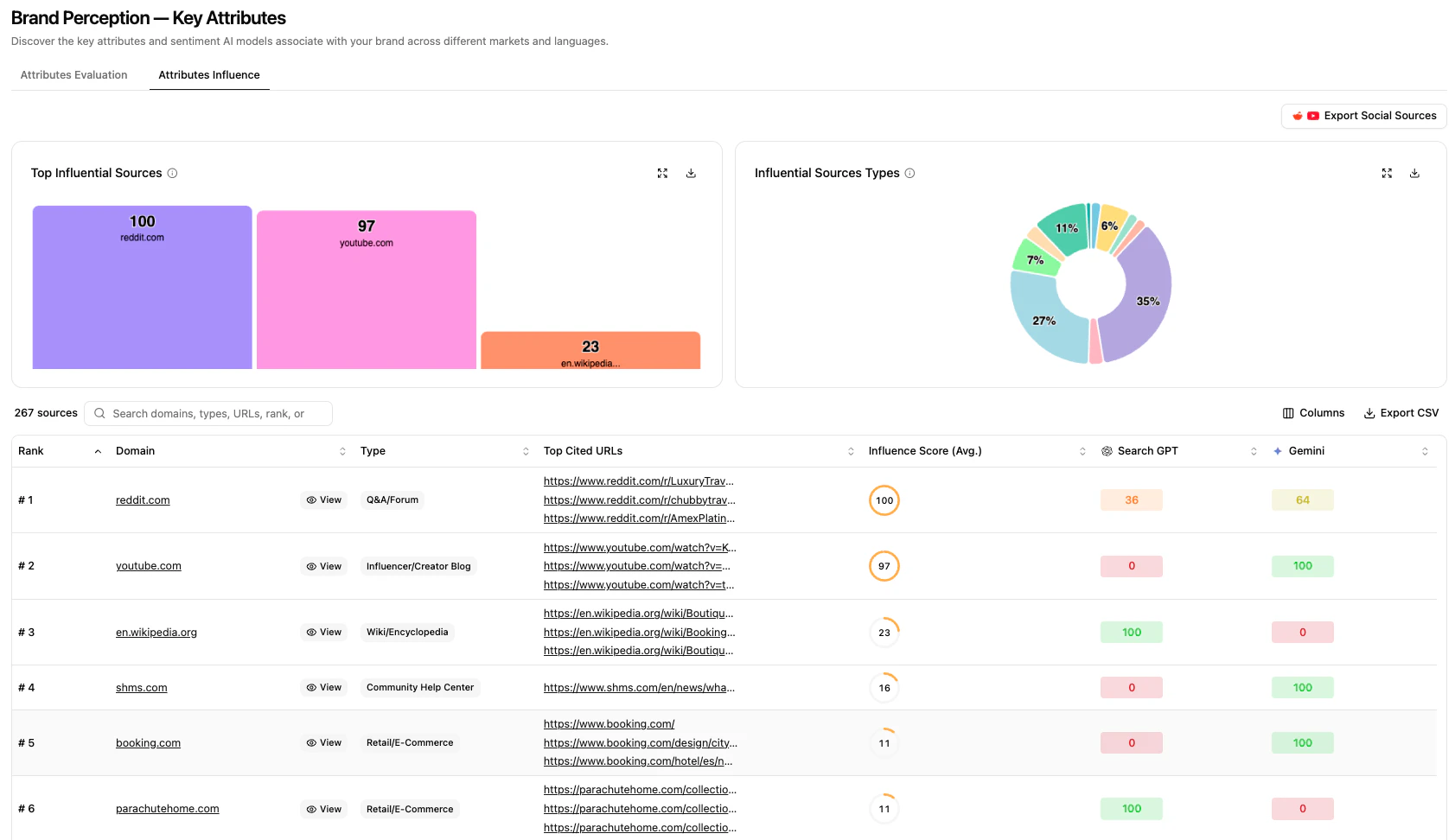
Detailed source table
In the Sources module, the analysis is not centered on brand mentions. The brand and competitor analysis parameters are not used in this section. Data collection prompts rely only on:
- the analysis category,
- the analysis attributes,
- the countries.
What’s next
Reddit Feed
Inspect Reddit conversations behind the scores.
Sources & Links (Search)
See sources and links inside the Search module.