

Cited URL vs. Ranked URL
Examples
Prompt: “What are the best running shoes for trail?” In ChatGPT you may see the answer cite several sources behind the scenes — URLs whose content was used to build the answer — alongside some ranked domains as links.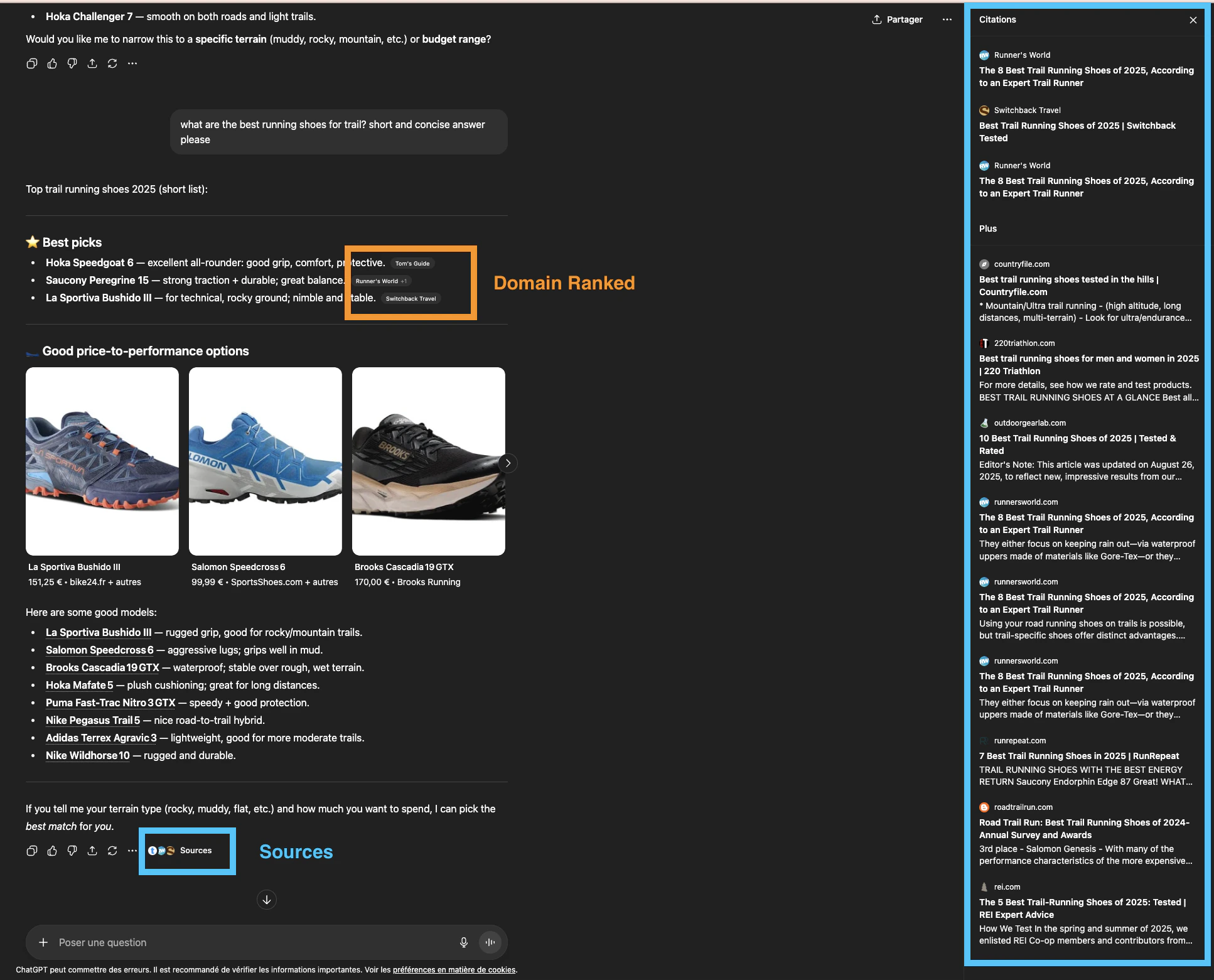
ChatGPT — sources accessible from the interface
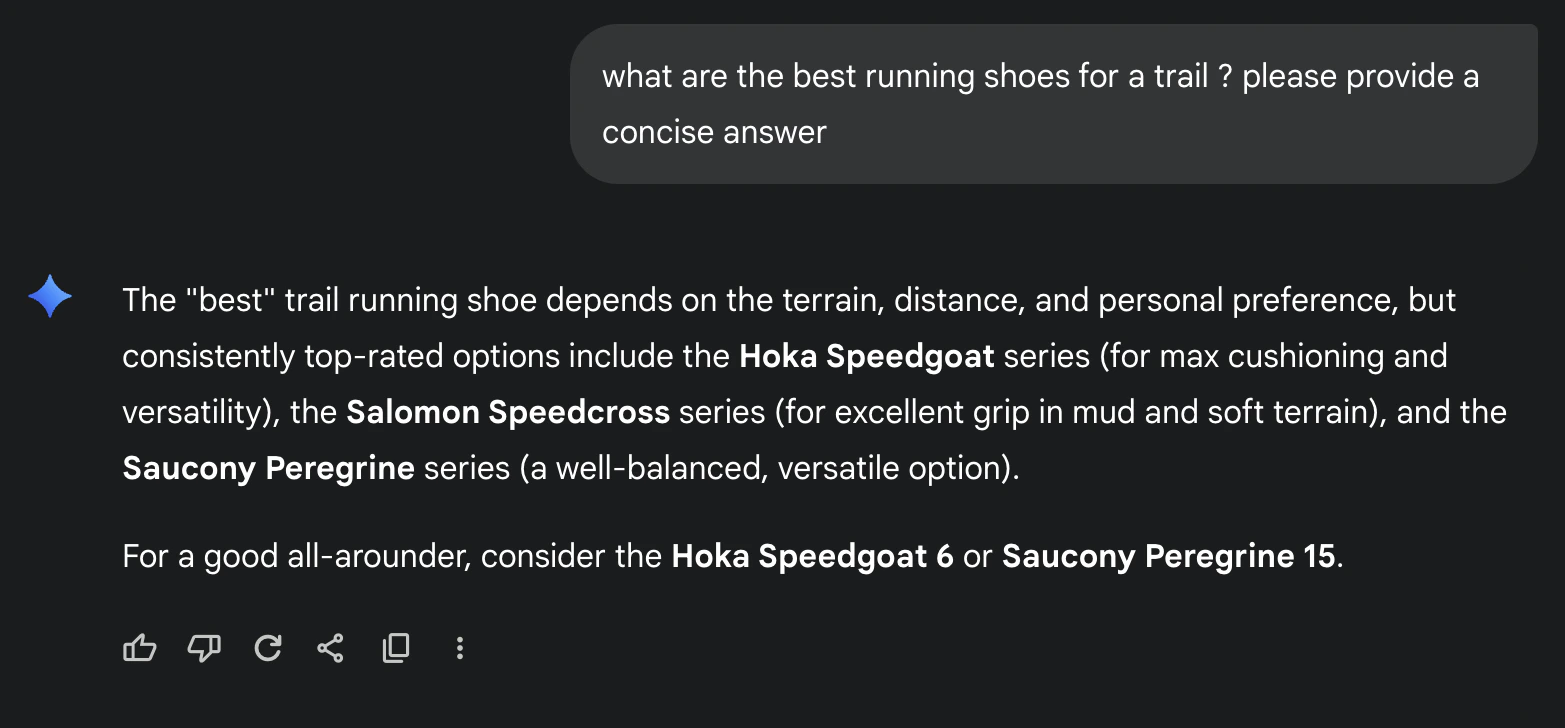
Gemini — same prompt, no visible sources or links
Important notes
- The model always uses sources (cited URLs) to build its answer.
- Not all sources are displayed as ranked URLs, and not all ranked URLs are used as sources.
- Whether sources are accessible depends on the model, prompt and collect.
- There are typically more sources feeding the answer than URLs shown in the final response.
- Sources may or may not mention brands.
Why we distinguish the two
The distinction matters for activation and strategy — each type plays a different role in your visibility ecosystem.To recap
- Cited URLs = “Sources” in the Search module = what the LLM reads.
- Ranked URLs = “Links” in the Search module = what the user sees.
- Both matter — they activate different levers: influence vs. visibility.
What’s next
Sources & Links view
Explore sources and links in the platform.
Query Fan-out Explained
The internal layer that produces sources and links.