Conversational AI assistants are becoming a new decision layer in the purchase journey. Instead of simply answering questions, LLMs increasingly select, compare, rank and recommend products directly within their responses, influencing what users discover before they ever visit a merchant’s website. This changes what visibility means for e-commerce and retail teams. It is no longer only about being mentioned in AI answers, it is also about which products are recommended, which brands dominate recommendations, and which merchants ultimately capture the opportunity. Shopping extends your existing Search project to this commercial layer. It analyses the same tracked prompts and enriches them with shopping placement insights, allowing you to understand not only whether AI talks about your brand, but also whether it recommends your products.
Shopping Overview

What this view helps you analyse

The Shopping Overview provides a high-level view of your AI shopping landscape. Rather than analysing individual products or merchants immediately, it helps answer broader questions such as:
  • How large is the AI Shelf for my category?
  • Which engines expose the richest shopping experience?
  • Which brands and merchants dominate recommendations?
  • How does the shopping ecosystem evolve over time?
  • Where should I investigate first?
From this page, you can progressively drill down into the Products, Brands and Merchants views to understand what drives these trends.
Shopping currently analyses shopping placements across ChatGPT, Perplexity and Google AI Mode.

AI shelf snapshot

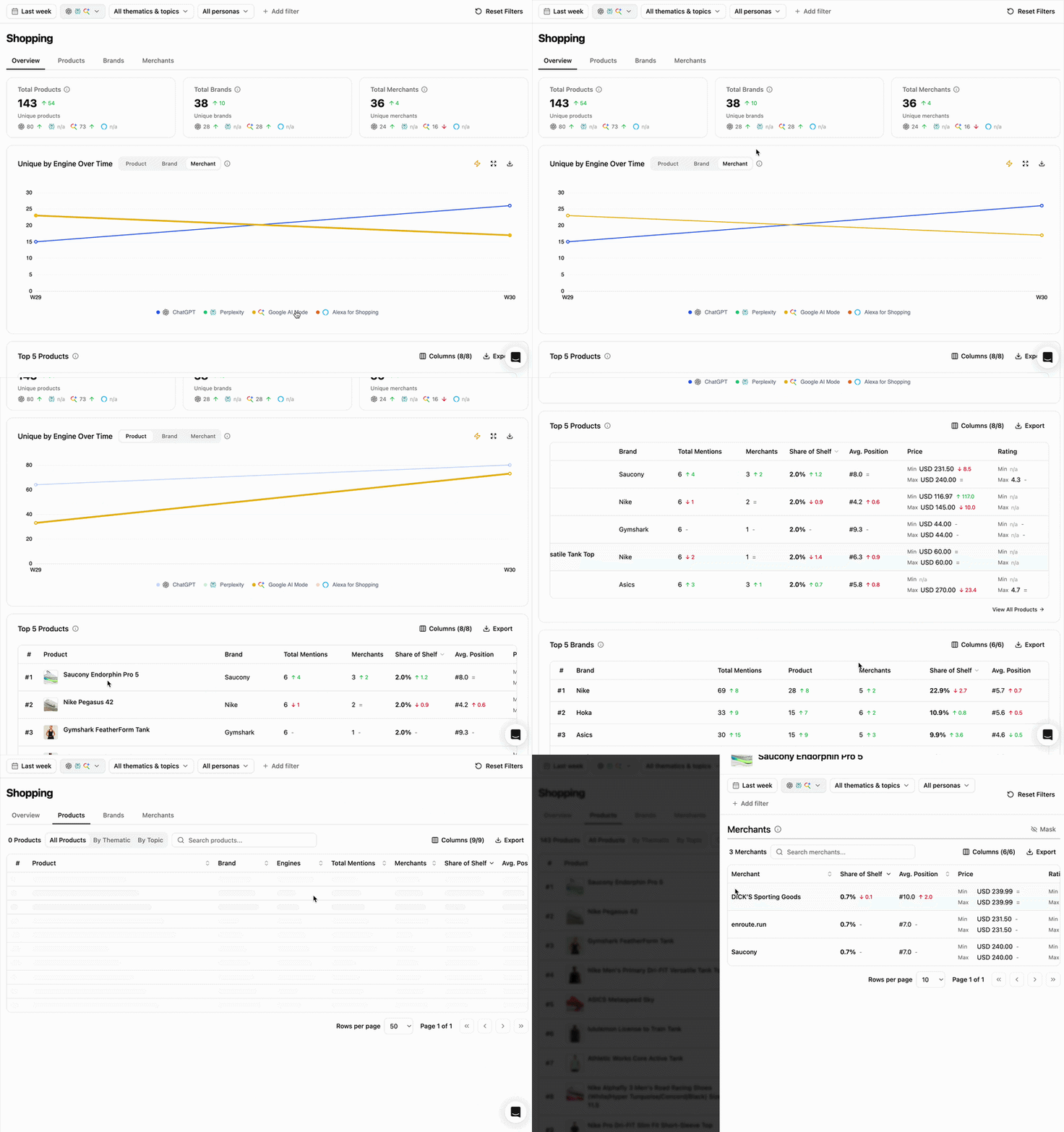
Screenshot 2026 07 27 At 15 47 10
The three KPI cards provide an instant snapshot of your AI Shelf for the selected period. They measure the number of unique Products, Brands and Merchants, recommended across your tracked prompts. Together, these indicators help you understand the breadth of your shopping ecosystem before analysing individual recommendations. For example, you may observe:
  • growing product diversity without new brands entering the market,
  • additional merchants selling existing products,
  • or a shrinking AI Shelf following an engine update.
These cards answer one of the first questions every brand or retailer asks: What does the AI Shelf look like today, and am I part of it?
Products are grouped, so colour or size variants of the same item are not counted separately.

How the AI Shelf evolves

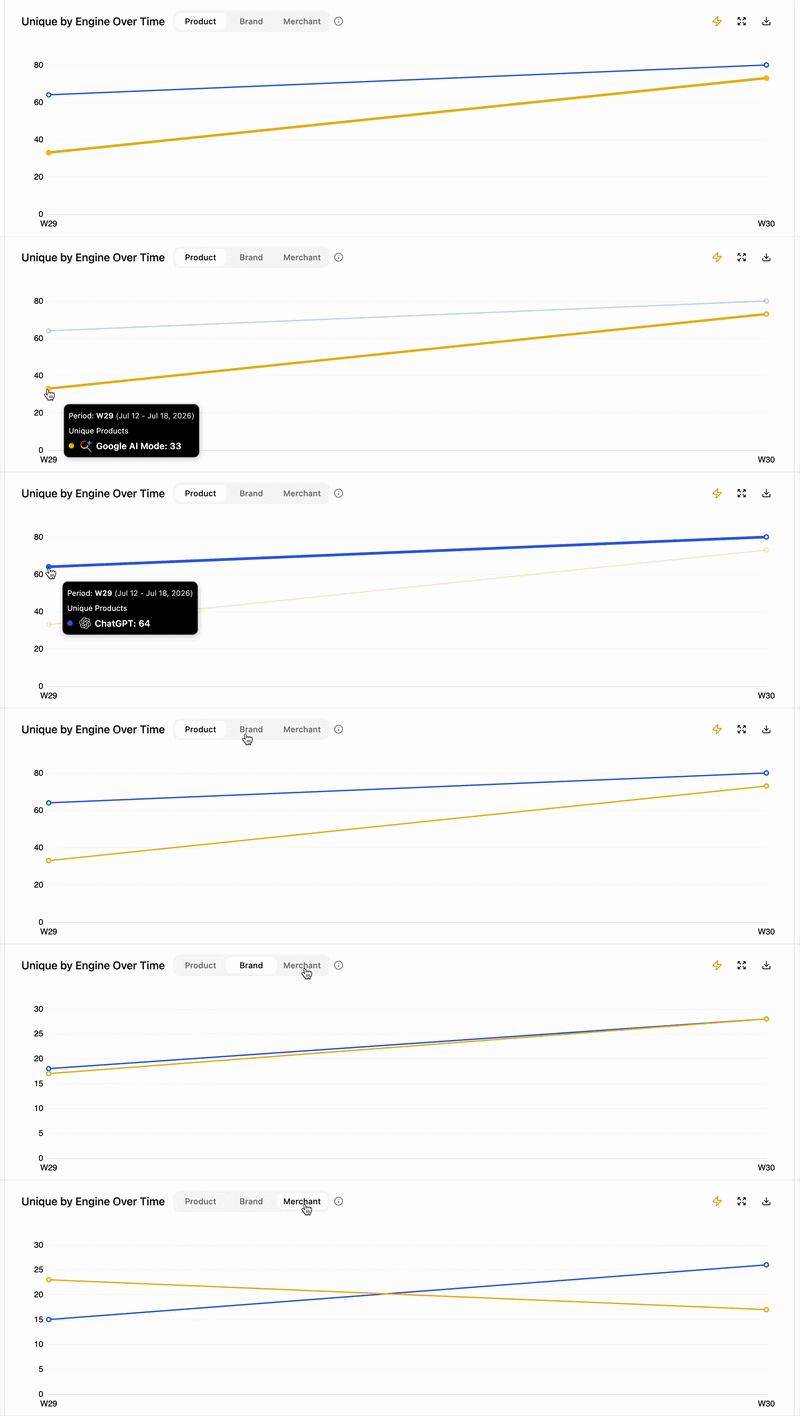
Shopping Overview Evolution Chart
The evolution chart shows how the AI Shelf changes over time for each shopping engine. Rather than tracking rankings, it helps you understand how conversational shopping experiences themselves evolve. Some engines may progressively recommend a wider variety of products, while others become more selective or reorganise their recommendations following model updates. Comparing these trends across engines helps distinguish market evolution from engine-specific behaviour, making it easier to interpret sudden changes in visibility.

Who occupies the AI Shelf

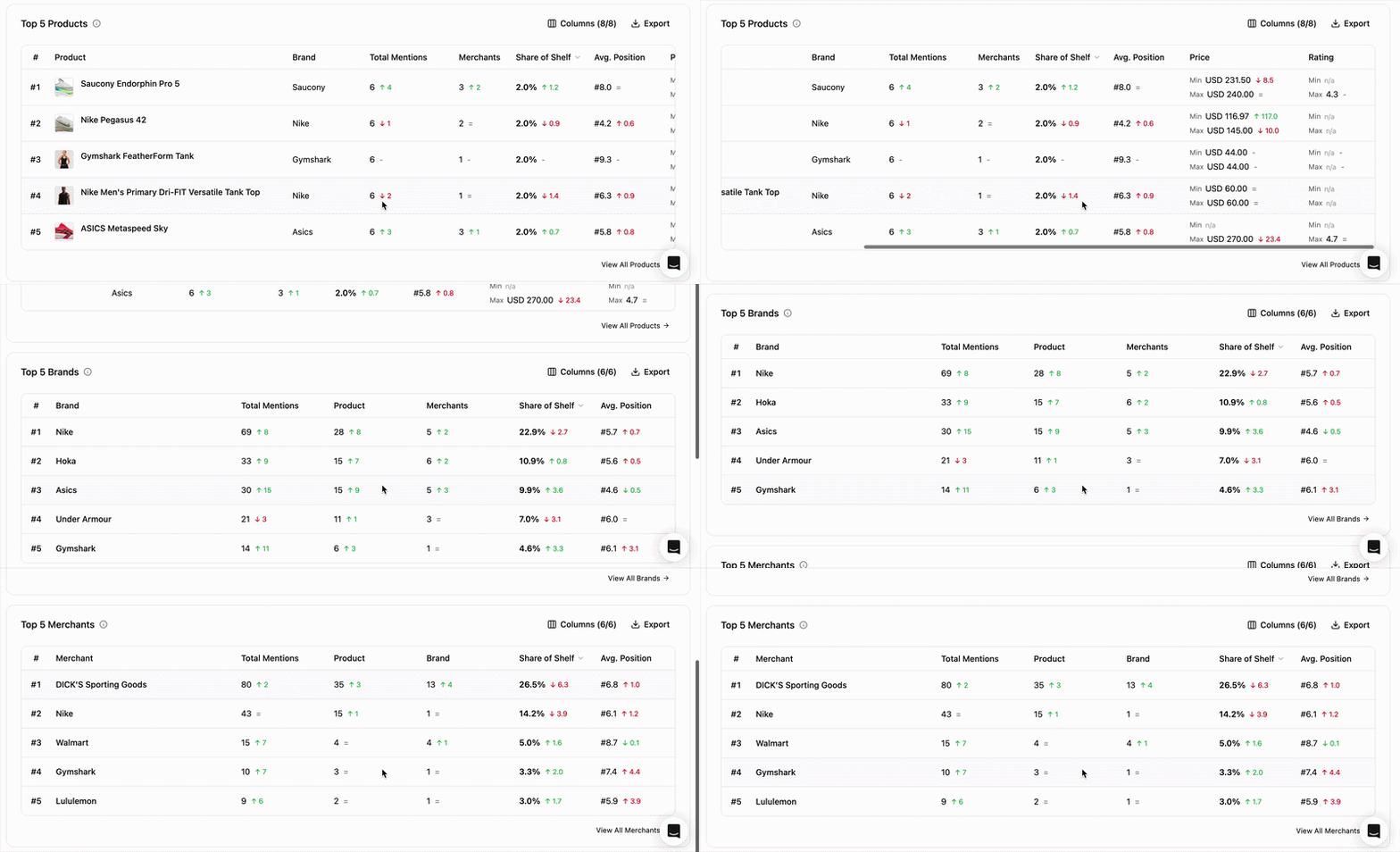
Shopping Overview Top5
The Overview highlights the leading Products, Brands and Merchants currently occupying the AI Shelf. These rankings provide an immediate view of who benefits most from AI recommendations and help identify:
  • products that consistently appear across shopping journeys,
  • brands building the strongest recommendation presence,
  • merchants capturing the greatest visibility,
  • emerging competitors entering the AI Shelf.
Each section also acts as an entry point to its dedicated analysis page, where you can explore the factors behind these rankings in greater detail.

Reading cues

These are signals to read, not rules.
Some shopping engines recommend significantly more products than others. This reflects differences in how each engine builds shopping experiences and should be monitored over time rather than interpreted as a permanent state.
New leaders often deserve further investigation. Open the corresponding Product or Brand page to understand whether the change reflects a lasting trend, a seasonal event or a temporary recommendation spike.
When more merchants appear around the same products, this usually indicates broader product availability and increasing commercial competition within AI shopping experiences.
Generative shopping engines evolve rapidly. A sudden expansion or contraction of the AI Shelf may reflect changes in recommendation logic, product availability or engine updates, and should always be analysed alongside the detailed Products, Brands and Merchants views.

How to use this view effectively

Start here to understand the overall size and composition of your AI Shelf using the available filters to focus your analysis on the market segment that matters most. Then progressively drill down into the dedicated views.Following this workflow allows you to move from a market-level understanding of the AI Shelf to the individual products, brands and merchants driving its composition.

Extra features

  • Filters — refine the data displayed.
  • Add/Hide columns — adapt the table to your workflow.
  • Export — extract filtered tables to CSV or Excel.
  • Search — find a brand or product via the search bar.
  • Sort — order by any column.

What’s next

Share of Shelf

Learn how recommendation visibility is measured and interpreted.

Products

Analyse which products AI shopping engines recommend.